
Can you fit an insulation jacket yourself, or do you need a specialist?
Vragen? Neem contact met ons op!

Fitting an insulation jacket yourself works in many cases, as long as it was made to measure and the component is easy to reach. For a hard-to-reach valve, a large section of pipework, or installation under time pressure during a shutdown, bringing in a specialist is usually the faster and safer route.
In this article you'll read when you can fit it yourself, when a specialist is the better call, and why the fit is what ultimately makes the difference.
Questions? Get in touch with us!
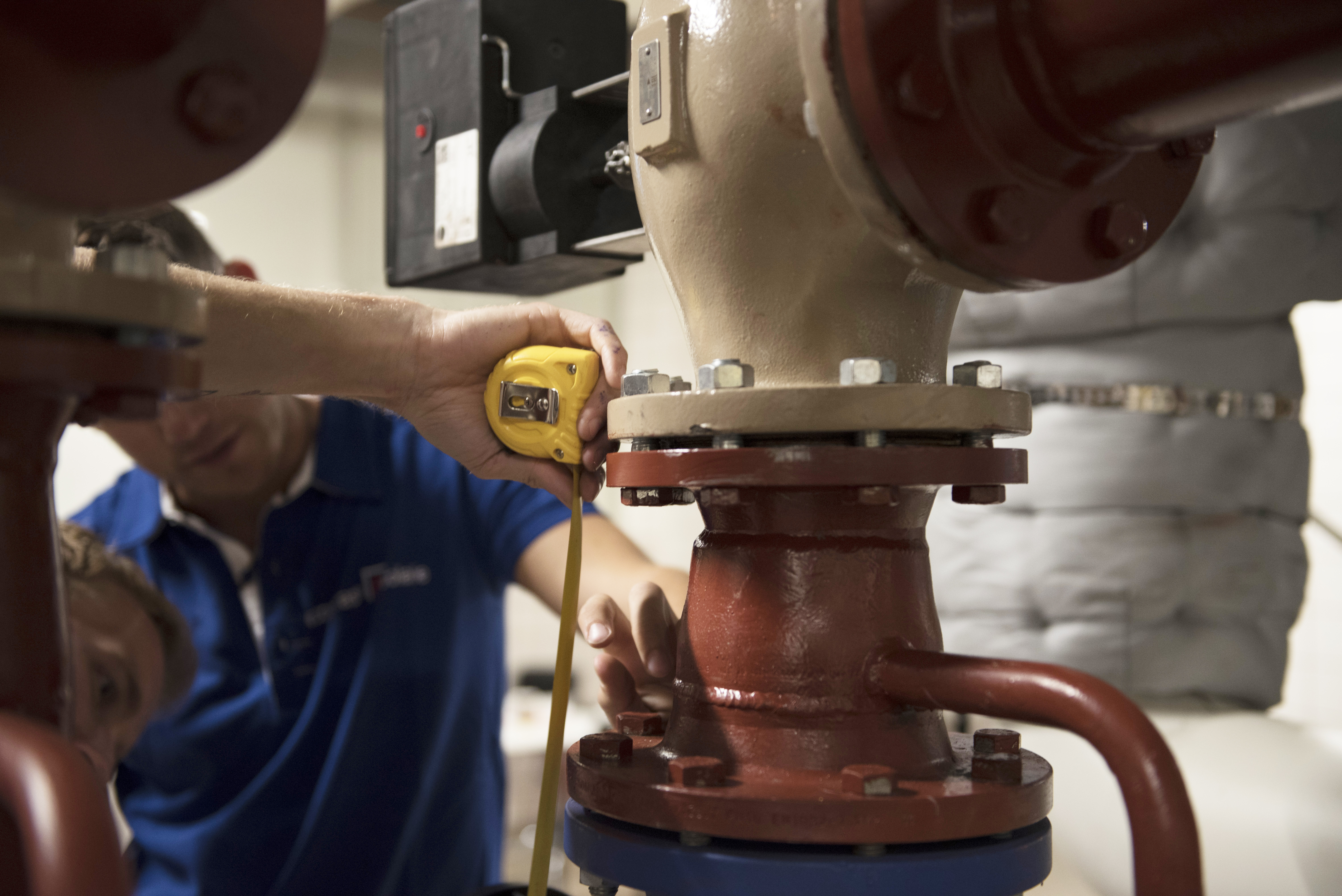
How fitting an insulation jacket works
Insulation jackets are wrapped around a component, such as a valve, flange, pump or heat exchanger, and closed with hooks, tension springs or hook-and-loop fasteners. Because every jacket is made to measure for that one component, it really only fits correctly in one way.
When a jacket is well designed and clearly matches the component, fitting it usually doesn't call for complicated tools. That makes fitting an insulation jacket yourself realistic for many maintenance teams.
When you can fit it yourself
-
Easily accessible components – smaller fittings and freestanding valves are usually straightforward to fit without help.
-
Enough space around the installation – enough room to move makes the fastening easier to tension and check.
-
A jacket that's already familiar – for recurring maintenance, your own team already knows the fastening and the order of steps.
What you need to do it yourself
Beyond the jacket itself, you don't need much: gloves, possibly a torque wrench for the fasteners, and someone who knows the fitting sequence. Time matters more than tools: build fitting and removal into the shutdown schedule, so the jacket isn't refitted in a rush.
When a specialist is the better choice
On hard-to-reach parts of an installation, with large or composite jackets, or work in an ATEX zone or at high temperatures, every step counts. A specialist spots more quickly whether a jacket truly fits, and prevents the insulating effect from being lost again after fitting.
On larger shutdowns, where several parts of an installation are insulated at once, professional fitting is usually more efficient too: every jacket sits right the first time instead of being corrected afterwards. A jacket that isn't refitted precisely after maintenance is, in fact, one of the biggest mistakes when installing insulation jackets, and that mistake shows up most often with rushed in-house fitting.
Why a good fit makes the difference
Whether you fit it yourself or bring in a specialist, the insulating effect lives or dies by the fit. If a jacket doesn't close completely, heat still escapes through whatever openings or seams remain.
Careful fitting, and especially refitting it correctly after maintenance, keeps the insulation performing at the level it was designed for. That's exactly why preparation matters as much as the fitting itself.
How Econtras helps you with this
Econtras comes to measure on site itself, so every insulation jacket is made to measure for your exact installation. That usually makes fitting a simple job for your own team.
For a difficult installation, a large shutdown, or specific safety requirements, we also fit it ourselves or advise your team on the best approach.
Conclusion
In many situations you can fit an insulation jacket yourself, especially on easily accessible components and with a team that already knows the fastening. On more complex installations, larger shutdowns or extra safety requirements, a specialist is worth it, because the fit after fitting decides how much insulation you actually keep.
Not sure whether your installation is suited to in-house fitting? We're happy to work through it with you.