
Insulating pipes, fittings and air ducts: which method suits your installation?
Vragen? Neem contact met ons op!
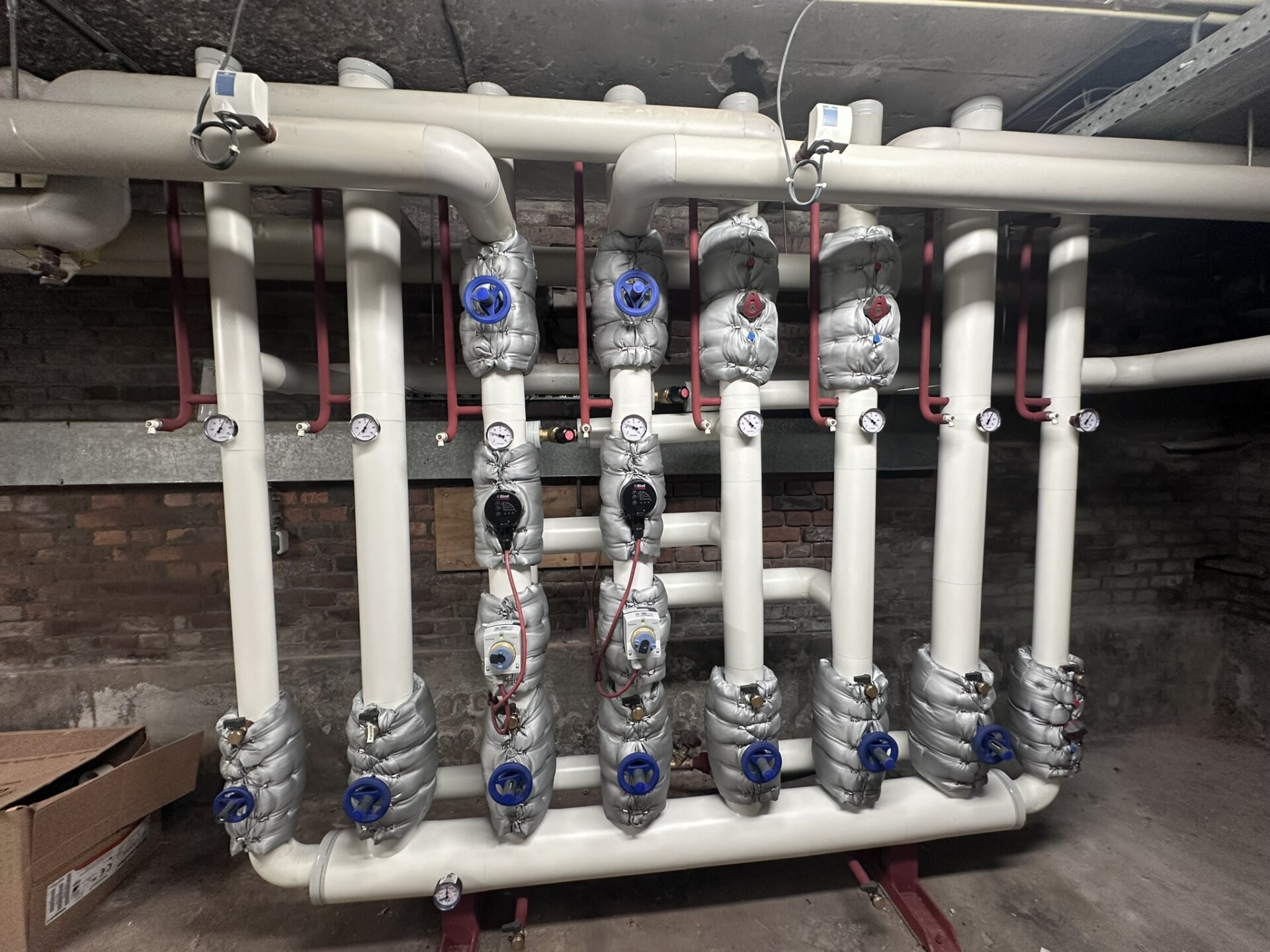
Insulating pipes, fittings and air ducts is often done with the same system in practice, even though each component needs something different. A straight pipe can take a fixed insulation jacket, a fitting has to stay accessible for maintenance, and an air duct has to deal with condensation and airtightness on top of keeping temperature. Choose the same system for all three, and you end up slightly under- or over-insulating everywhere.
This article explains exactly what the choice for each component should be based on.
Why pipes, fittings and air ducts don't take the same insulation
The right insulation method starts with the goal: limiting heat loss, preventing condensation, dampening noise, or increasing safety. Warm pipes are usually about energy savings. Cold systems, such as cooling lines or air ducts carrying cold air, are mainly about preventing condensation. Air ducts also need airtightness, something pipes and fittings never have to deal with.
Choosing the same standard solution for all three components means, by definition, insulating part of the installation incorrectly.
Pipes: straight runs, fixed insulation
Straight pipes are the easiest to insulate. A fixed insulation jacket or shell stays in place permanently and keeps the insulation value stable, as long as the run stays straight and doesn't need to be opened regularly for maintenance.
That changes as soon as a pipe moves into a bend, a weld, or a connection. Those irregularly shaped transitions are exactly where a fixed shell stops fitting.
Fittings: why removable is the standard here
Valves, flanges and pumps have a complex shape and need to stay accessible for inspection or maintenance. With fixed insulation, the material gets removed during maintenance and isn't always put back after the shutdown. That's exactly why insulating fittings is usually done with a removable insulation jacket: it comes off in a few minutes and goes back on just as tightly.
- Straight pipe – fixed insulation shell, permanent, no maintenance needed
- Valve or flange – removable insulation jacket, on and off in minutes
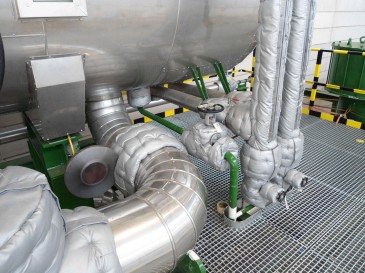
- Pump or complex component – custom jacket, shaped to the exact geometry
Air ducts: temperature, condensation and airtightness together
Air ducts running through unheated spaces lose heat through the duct wall. Ducts carrying cold air have the opposite problem: outside air condensing on the duct surface, with a risk of mould and corrosion. A suitable insulation system also has to keep every seam and joint airtight, otherwise air still leaks out through the gaps.
This combination of requirements is why air ducts need a different system than pipes: not just the insulation value has to be right, but the sealing of every seam too.
What the environment adds to the choice
Besides the component itself, the conditions matter. High temperatures place different demands on the material than low temperatures. Outdoor installations need insulation that withstands rain, wind and UV exposure; in process industries, chemicals or oil can shorten a material's lifespan. A system that performs well indoors doesn't necessarily do so outdoors.
Maintenance decides whether insulation keeps working
Insulation that has to be removed and reapplied repeatedly is inherently vulnerable with a fixed system: every maintenance round is a chance for the material to get damaged or left off. For components that need to be opened regularly, a removable solution is therefore not just more practical but more durable too, because the insulation value stays intact after maintenance.
One installation, usually a combination of methods
The right choice is rarely made component by component, but from the installation as a whole. In practice that usually means a combination: fixed insulation on the straight pipe runs, removable jackets on fittings, and an airtight system on the ducts. That way each component is insulated the way it's meant to be, instead of applying one average solution that's optimal nowhere.
How Econtras helps you with this
Econtras comes to measure on site and assesses the installation as a whole: where fixed insulation works well, where a removable jacket is needed, and which components need a separate approach for airtightness. Insulation jackets are custom-made, from a single fitting to a complete pipe run.
Take a look at the range on the thermal insulation product page, and read why we always come to measure on site before making a jacket.
Conclusion
Pipes, fittings and air ducts each call for a different insulation method, because they serve a different purpose and are maintained differently. A fixed shell suits a straight pipe, a removable jacket suits a fitting, and an airtight system suits a duct. Combining these three instead of applying one standard solution everywhere insulates the installation as a whole efficiently.
Want to know which combination suits your installation best? Get in touch with u, we're happy to think it through with you.