
What should you insulate in a utility building for the biggest return?
Vragen? Neem contact met ons op!
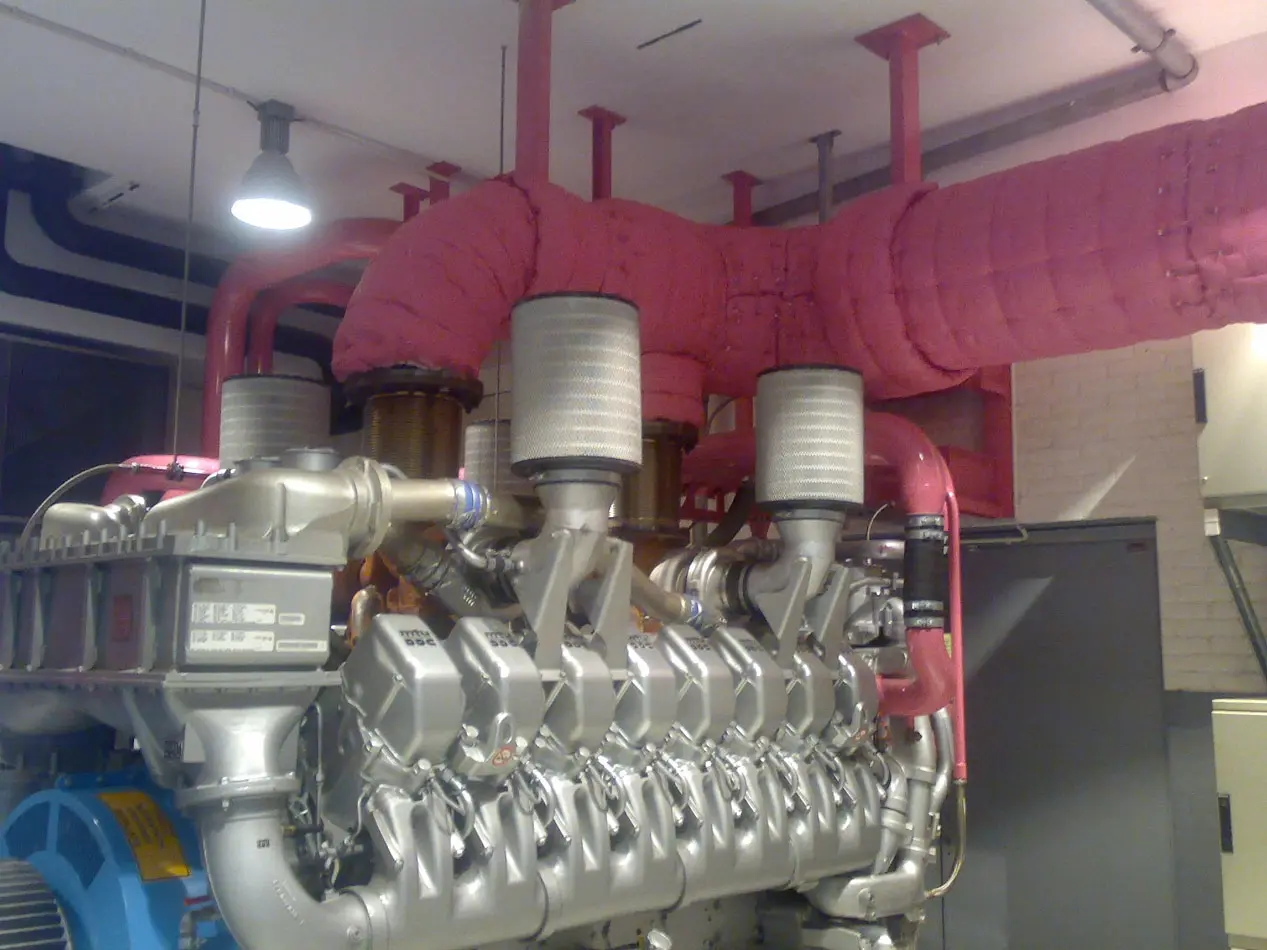
What should you insulate in a utility building for the biggest return? Usually not the pipework, because in offices, hospitals, care facilities and swimming pools that's already insulated as standard. The biggest return sits with the fittings, valves and plant components that are often left uninsulated: a single uninsulated valve can lose as much heat as several metres of uninsulated pipe.
In this article you'll read where insulation in a utility building has the most effect, and how you work out that return per installation.
Pipework is the starting point, not the endpoint
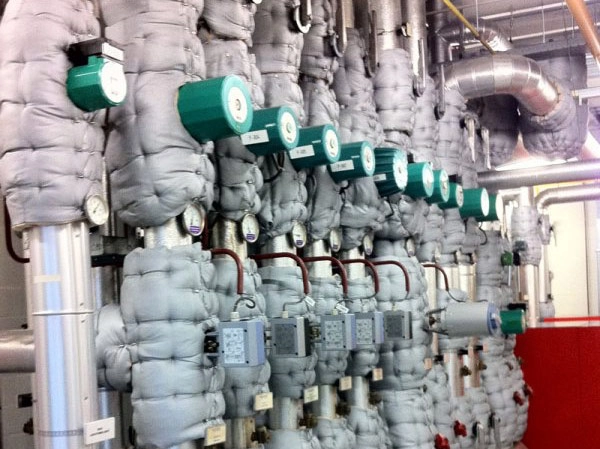
In most utility buildings, straight pipework is already insulated. That makes sense: pipework is relatively easy to insulate and is usually the first thing addressed during new build or renovation. Well-insulated pipework moves heat or cold efficiently, without energy leaking away along the route.
Even so, there's rarely much return left here. Because pipework is usually already insulated, the easy gains are gone. The return you can still capture sits in the components that are less obvious, and are therefore skipped more often.
Fittings and valves: the components most often skipped
Valves, flanges, control valves and pumps are frequently left uninsulated in utility building installations. That's because they have an irregular shape and need to stay accessible for inspection and maintenance. Fixed insulation is difficult to build around them, and often disappears for good after maintenance, with no one getting around to putting it back.
This is exactly where a lot of heat is lost. A removable insulation jacket still covers these components properly, without giving up accessibility for maintenance. In most installations, this is where the biggest direct return sits.
-
Valves and control valves – irregular shape, often skipped when insulation is fixed
-
Flanges and couplings – need to open regularly for inspection, so insulation disappears after maintenance
-
Pumps – run continuously and keep radiating heat when they're left uncovered
Heat exchangers and other plant components that get overlooked
Besides pipework and fittings, larger plant components play a role too: heat exchangers, pumps and other parts of HVAC installations. These often run continuously, giving them a direct impact on the building's energy consumption.
If these components stay under-insulated, heat is lost structurally, even when the rest of the installation is in good shape. Including them in the insulation plan captures the last bit of return the installation has to offer.
For cold installations, the return also lies in preventing condensation
A utility building doesn't only move heat, it often moves cold too: think of chilled water pipework or climate installations. On cold surfaces, condensation plays a role alongside energy loss. If the insulation isn't right, moisture from the air condenses on the installation.
That leads to corrosion, moisture damage and, over time, a shorter service life for the installation. Good insulation on cold pipework and installations therefore saves energy and prevents maintenance costs you'd rather avoid.
Work out the return at installation level, not per component
The biggest return doesn't come from insulating a few components at random, but from looking at the installation as a whole. Where is most heat being lost, and which components are involved: pipework, fittings, heat exchangers, or a combination? Only once that's mapped out do you know where insulating actually pays off.
In practice, the combination of well-insulated pipework with removable insulation on fittings and plant components usually delivers the biggest saving, precisely because that last category is so often skipped today.
How Econtras helps you with this
At Econtras, we look at your installation as a whole. We come and measure on site ourselves and map out where the biggest heat losses sit and which components deliver the most return once they're insulated as well.
Based on that, we design insulation mattresses made to measure for the components where fixed insulation doesn't work, or keeps disappearing after maintenance. In one apartment complex's boiler room, that delivered a saving of €970.96 a year; read the full story in this case.
Conclusion
The biggest return in a utility building doesn't come from even better insulated pipework, but from the fittings, valves and plant components that are so often skipped today. Looking at your installation as a whole shows you where insulating genuinely pays off.
Want to know where the biggest return sits in your building? Get in touch with us, we're happy to map it out together with you.