
When do insulation jackets deliver less return — and how do you improve that?
Vragen? Neem contact met ons op!

Insulation jackets don't deliver the same return in every situation. With a small temperature difference, a jacket that doesn't fit well, or an installation that's only partly insulated, insulation jackets deliver less return than you'd expect.
In this blog you'll read in which situations the return on insulation jackets falls short, and how you prevent or fix that in practice.
Questions? Get in touch with us!
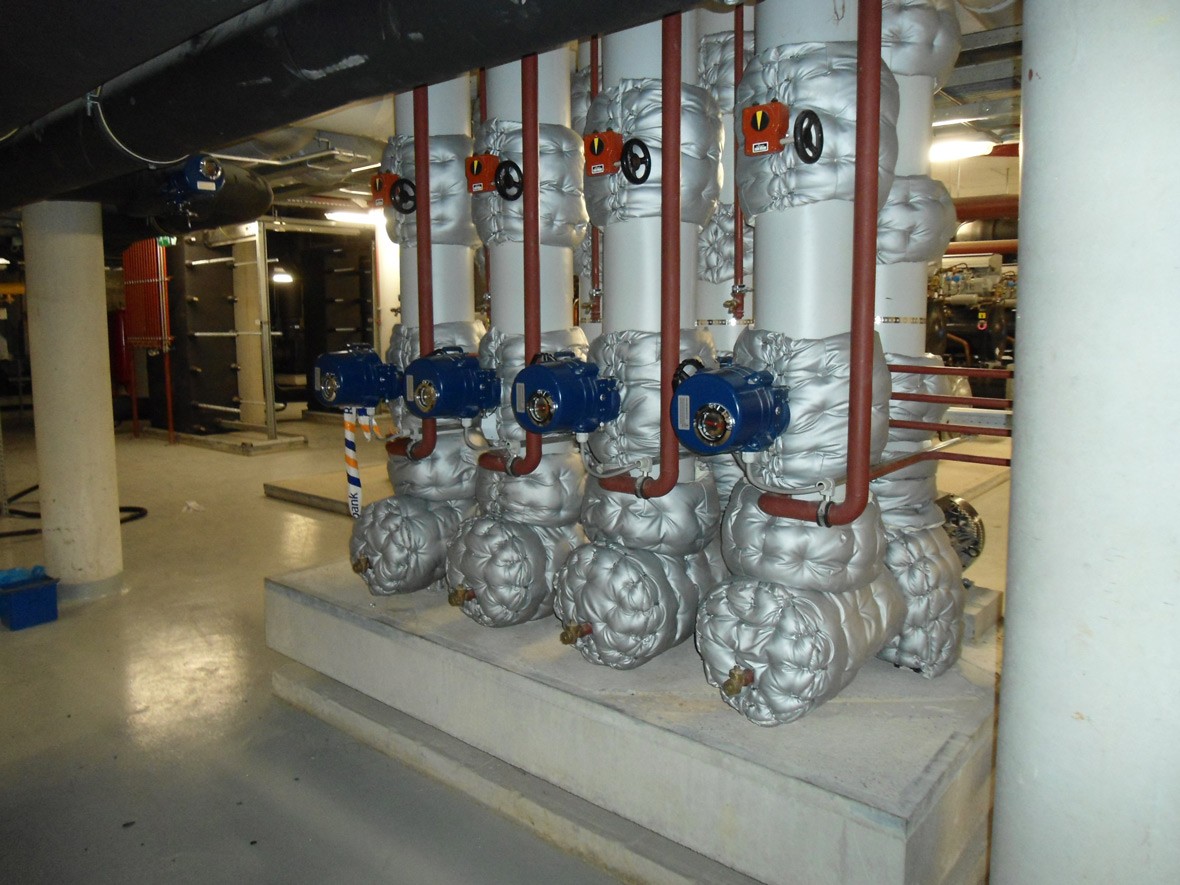
When the temperature difference is limited
The bigger the difference between an installation's temperature and its surroundings, the more heat is lost — and the more an insulation jacket delivers. Installations with a relatively low process temperature already lose less heat to begin with, so the savings you see on paper are smaller too.
That doesn't make insulation pointless there. Safety and preventing condensation often weigh heavier than the energy savings alone, and are reason enough on their own to insulate.
Think of a return line that's only a few degrees warmer than the surrounding space, or a tank that runs mostly at ambient temperature. Insulation still pays off there, just with a different payback period than a 180°C pipe.
When a jacket doesn't fit well
The return on an insulation jacket stands or falls with the fit. If the jacket doesn't sit tight around a valve, flange or bend, heat still escapes through the seams and gaps — right where you just insulated.
This usually happens when a jacket isn't custom-made or isn't put back precisely after a maintenance shutdown. Read our blog on the biggest installation mistakes to see what causes this in practice and how to prevent it.
When you only insulate part of the installation
Pipes get standard insulation in most installations, but valves, fittings and flanges often stay unprotected. As long as those components are left exposed, a large share of the heat loss simply remains, no matter how well the rest of the installation is insulated.
The biggest return sits exactly in the components you're currently skipping. Tackling pipes and fittings together usually delivers far higher savings than insulating only the obvious part.
When maintenance disturbs the fit
Installations that regularly need to be opened for inspection or maintenance need insulation you can remove and refit easily. Insulation jackets are made for that, but with fixed insulation the material often disappears after a maintenance shutdown and never goes back on.
If a jacket is refitted but not exactly the way it originally sat, the fit changes and the return gradually drops. A jacket designed specifically for repeated use keeps its shape and insulating performance even after several maintenance rounds.
How to increase the return
In practice, the return on insulation jackets can almost always be improved by looking at the installation as a whole, instead of component by component. The three situations above almost always come down to the same three points: what you insulate, how precisely it fits, and whether it goes back on after maintenance.
-
Map the entire installation – not just pipes, but also valves, flanges and pumps.
-
Choose custom-made jackets – a jacket that fits precisely doesn't leak heat through seams or gaps.
-
Plan the refitting – build insulation into the maintenance plan, so a jacket sits tight around the component again after every shutdown.
A concrete example: at an apartment complex, insulating the pipes, valves and pumps in the boiler room together delivered a saving of €970.96 a year — precisely because the whole installation was covered, not just the pipes. Read the full approach in this case.
How Econtras helps you with this
At Econtras®, we look at your installation as a whole: where heat is lost, which components deliver the most return once insulated, and where current insulation is losing ground due to maintenance. Based on that, we design custom-made insulation jackets for every component, from a single fitting to a complete installation.
We come and measure up ourselves, so the jacket fits correctly from day one, and we make it so it sits exactly back in place after every maintenance shutdown.
Conclusion
Insulation jackets deliver a clear return in most installations, but that return drops with a small temperature difference, a jacket that doesn't fit well, or an installation that's only partly insulated. Address these points and you get the most out of your insulation.
Want to know where in your installation the greatest return is available? Feel free to get in touch, we're happy to work it out with you.
Questions? Get in touch with us!