
Project and news

Project and news
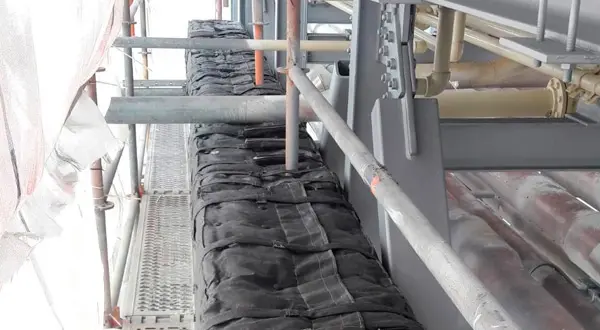
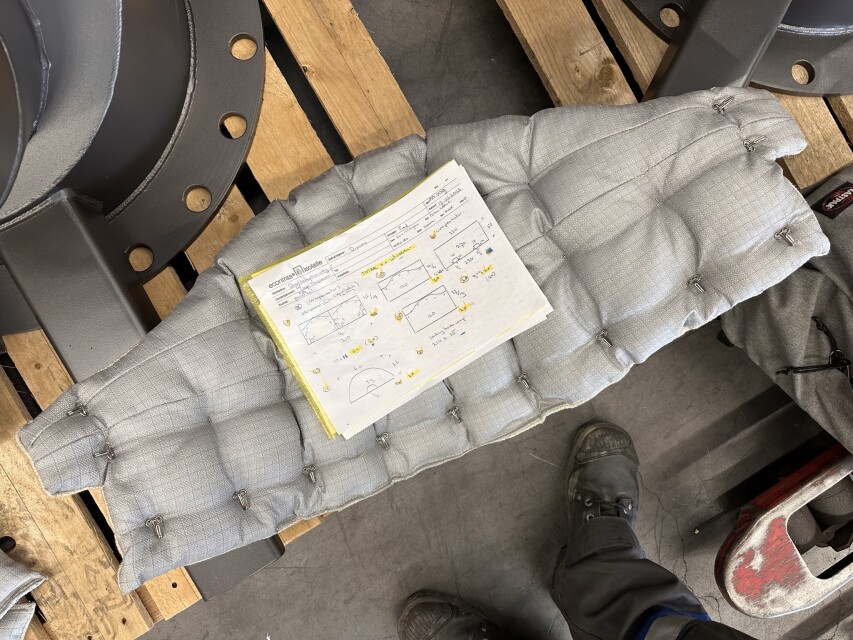
Why do we come to measure on-site?
When companies want to install insulation blankets, they sometimes expect that just the dimensions of a component are enough to produce a blanket. Yet at Econtras, we almost always choose to measure installations on-site ourselves first. We don't do this for nothing.

How do I ensure my critical systems keep working during a fire and why is JetBlack the best...
In industrial environments such as power plants and petrochemical facilities, fire safety is a prerequisite for continuity. When residual risks remain despite active systems, you need Passive Fire Protection (PFP) to prevent escalation. A question we often hear is how to protect your vital systems and why JetBlack® is the best solution for this.

How is the price of an insulation mattress determined and which factors have the greatest influence?
An insulation mattress is not an off-the-shelf product. The price is determined by several factors that together influence performance, lifespan and ultimately the return. In this blog, we explain which elements play a role and why a well-considered decision is more important than just the purchase price.

What is the difference between an insulation mattress and a traditional fixed insulation system?
In many technical installations, heat loss is limited using traditional fixed insulation, such as insulation shells with metal cladding around pipes. This is an effective solution as long as an installation is rarely modified or maintained. However, once valves, fittings or components that need to remain regularly accessible are involved, doubts often arise. Is fixed insulation still the best choice, or does an insulation mattress offer more advantages in practice?

How quickly does an insulation mattress pay for itself?
Every day, heat is unknowingly lost in technical installations. Uninsulated valves, flanges, pumps, and pipes continuously radiate energy into the environment. This costs money, increases energy consumption, and creates unnecessary CO₂ emissions. Our insulation mattresses offer a simple and effective solution, often paying for themselves within one to two years.

How does an insulation mattress help you meet energy-saving requirements and save money immediately?
With insulation mattresses, you essentially kill two birds with one stone. On the one hand, you immediately comply with the legal obligation. The energy conservation obligation stipulates that you must take all measures that pay for themselves within five years. Insulation mattresses fall squarely into that category and are even included on the Netherlands Enterprise Agency's (RVO) Approved Measures List (EML). This means you can demonstrate that you've implemented a recognized and proven effective measure.

Turbine insulation to reduce heat loss and energy costs
Turbines produce extremely high temperatures. If this heat escapes through the turbine casing, flanges, or inspection points, energy consumption increases and efficiency decreases. By insulating a turbine with custom-made Econtras® insulation jackets, the heat remains in the process, and the turbine runs more efficiently, resulting in lower energy costs.

Insulating steam systems for maximum efficiency and lower energy costs
Steam systems consume a lot of energy and lose significant amounts of heat through pipes, fittings, and boilers. Insulating these components with custom-made insulation pads retains the heat within the system, keeps your system running more consistently, and saves you significantly on energy costs.
